
Corporate & Business Law
Corporate Restructuring Advisory
Restructuring may be needed when the business has outgrown its ownership model, activities need separation, succession is approaching, investors require a cleaner structure or capital needs to be reorganised. Lal Ghai & Associates helps clients define the objective, compare routes and coordinate the corporate and regulatory work involved.
Many successful businesses across India begin as single-entity family enterprises and gradually grow into multi-division operations, multi-generational ownership structures, or group companies spanning manufacturing, trading, services, real estate, and investment activities. At a certain stage of growth, the original corporate structure may stop serving the business — creating tax inefficiency, complicating succession planning, restricting investor entry, or no longer reflecting how the business actually operates.
Corporate restructuring is the legal mechanism for resolving this gap. Lal Ghai & Associates provides end-to-end corporate restructuring advisory across India — covering mergers, demergers, slump sales, share swaps, capital reduction, and conversion of business structures. We manage every stage from strategic structuring and valuation coordination to scheme drafting, regulatory filings, and final approval before the National Company Law Tribunal (NCLT).
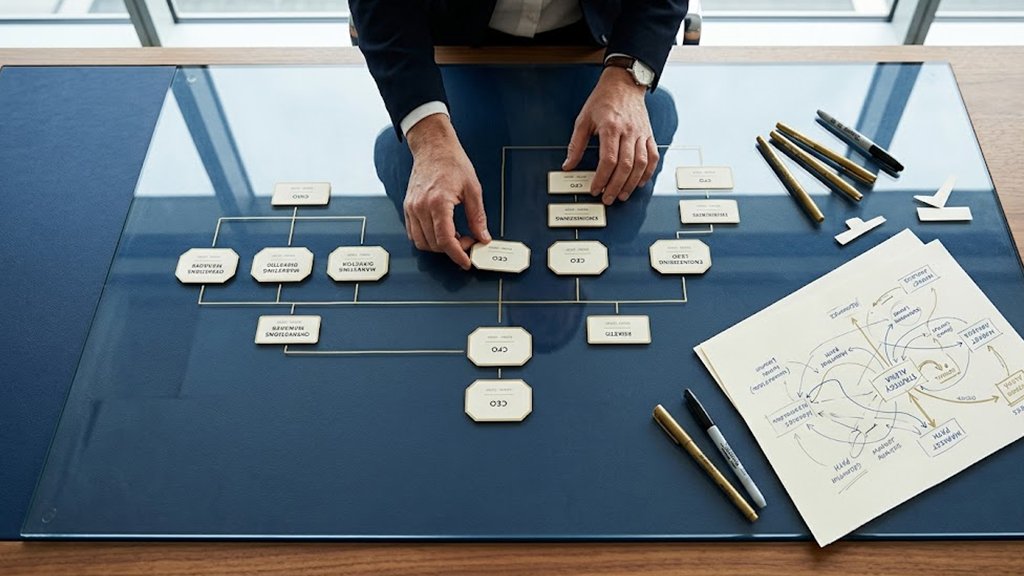
What is Corporate Restructuring?
Corporate restructuring is the legal and financial process of reorganising a company’s ownership structure, business operations, capital structure, or group structure — through mechanisms such as mergers, demergers, slump sales, or capital reduction — typically requiring approval from the National Company Law Tribunal (NCLT) under Sections 230 to 240 of the Companies Act, 2013.
Corporate restructuring covers a wide range of transactions, each governed by specific provisions of the Companies Act, 2013, the Income Tax Act, 1961, and — where listed entities or significant shareholding changes are involved — SEBI regulations. The choice of restructuring mechanism depends on the business objective: combining two entities calls for a merger or amalgamation; separating business divisions calls for a demerger; transferring an entire business undertaking calls for a slump sale; and adjusting share capital or ownership calls for capital restructuring or a share swap.
Most restructuring transactions that involve transfer of undertakings between companies require a Scheme of Arrangement to be filed before the NCLT under Section 230 of the Companies Act, 2013. The NCLT process involves creditor and shareholder approval, regulatory notices to authorities including the Registrar of Companies, Income Tax Department, and Official Liquidator, and a final sanction order — typically taking 6 to 12 months depending on complexity and objections raised.
Who Needs Corporate Restructuring Advisory?
- Family businesses planning succession across multiple generations or family branches
- Group companies with multiple entities seeking consolidation or simplification
- Manufacturers separating manufacturing operations from real estate or trading divisions
- Companies preparing for SME IPO or main board listing requiring a clean corporate structure
- Businesses seeking investment where investors require restructuring as a condition precedent
- Companies acquiring or merging with another business entity
- Businesses converting structure — partnership to LLP, private to public company, or vice versa
- Companies undertaking capital reduction or share buy-back
- Businesses divesting a division through slump sale to a strategic buyer
Types of Corporate Restructuring We Advise On
Each restructuring mechanism serves a different strategic purpose. Choosing the correct structure — and the correct sequence of transactions — determines tax outcome, approval timeline, and long-term operational clarity:
Merger / Amalgamation Advisory
Two or more companies combine into a single entity. Used for consolidating group companies, eliminating duplicate compliance, or combining complementary operations under one legal structure.
Demerger Advisory
A company splits one or more business undertakings into a separate entity. Used to separate distinct business lines for sale, succession planning, or to ring-fence risk between divisions.
Slump Sale Advisory
Transfer of an entire business undertaking as a going concern for a lump-sum consideration, without itemising individual assets and liabilities — under Section 50B of the Income Tax Act, 1961.
Share Swap and Ownership Restructuring
Share swap structures are often used in group reorganizations, acquisitions, investor entry, or ownership realignment.
Entity Conversion
Conversion of a business structure — proprietorship to Pvt Ltd, partnership to LLP, private company to public company, or vice versa — to align legal form with operational and funding needs.
Capital Restructuring
Reduction of share capital, buy-back of shares, conversion of debt to equity, or reclassification of share capital under Sections 66 and 68 of the Companies Act, 2013.
Our Corporate Restructuring Services
Strategic & Transaction Advisory
- Restructuring options assessment and strategic recommendation
- Tax-efficiency structuring under Income Tax Act provisions
- Valuation coordination with registered valuers
- Swap ratio determination for mergers and demergers
- Due diligence coordination for acquisitions
- Share purchase agreement and shareholder agreement drafting
- Capital structure analysis and reduction planning
- Group restructuring for multi-entity family businesses
Legal & Regulatory Execution
- Scheme of Arrangement drafting (Section 230, Companies Act 2013)
- NCLT petition filing and representation
- Creditor and shareholder meeting coordination
- Regulatory notices to ROC, Income Tax, Official Liquidator, RBI/SEBI as applicable
- Stock exchange and SEBI compliance for listed entity restructuring
- Post-scheme implementation — asset transfer, employee transfer, name change
- Fast Track Merger filings (Section 233) for eligible small companies
- Stamp duty advisory on asset and share transfers
Documents Typically Required for Corporate Restructuring
- Audited Financial Statements Last 3 years' financials for all entities involved in the restructuring
- Certificate of Incorporation & MoA/AoA For all companies party to the scheme
- Valuation Report From a Registered Valuer (IBBI-registered) for share swap ratio or consideration determination
- Shareholding Pattern Current shareholding of all entities involved, including promoter and institutional holdings
- List of Creditors Secured and unsecured creditors of all companies — required for NCLT notice and approval process
- Board Resolutions Approving the scheme and authorising signatories to proceed with filings
- Auditor's Certificate Confirming accounting treatment complies with applicable Accounting Standards (Ind AS)
- Existing Material Contracts Lease agreements, loan agreements, licences requiring novation or assignment as part of the restructuring
Why Businesses Choose Lal Ghai & Associates
Business-First Advisory
We do not suggest restructuring just because it is legally possible. We first check whether it makes business sense.
Strong Regulatory Compliance Focus
Every restructuring route has its own legal process, approvals, filings, timelines, and documentation requirements. We help clients manage regulatory compliance at every stage.
End-to-End Support
From initial structuring to scheme drafting, regulatory filings, NCLT coordination, and post-approval compliance, we support the process from start to finish.
Experience With Promoter-Led and Family Businesses
Many restructuring matters involve family ownership, group companies, succession, and control issues. We understand the sensitivity of such matters and help create practical solutions.
ICSI Peer Review Recognised
Our firm holds ICSI Peer Review recognition, which means our processes and documentation standards have been independently reviewed against the Institute's quality benchmarks — not just our own word for it.
Clear Communication
Corporate restructuring can be technical, but our advisory is kept clear and easy to understand. You will know what is being done, why it is being done, and what impact it will have.
Industries We Serve
Frequently Asked Questions
Corporate restructuring is the legal and financial process of reorganising a company's ownership structure, business operations, capital structure, or group structure — through mechanisms such as mergers, demergers, slump sales, or capital reduction — typically requiring NCLT approval under Sections 230 to 240 of the Companies Act, 2013. The mechanism chosen depends on the objective: combining entities calls for a merger, separating divisions calls for a demerger, and transferring an entire business undertaking calls for a slump sale.
A common example of corporate restructuring is a merger, where two companies combine to form a single entity to improve efficiency and growth. Other examples include demergers, acquisitions, debt restructuring, share capital reduction, and business divisions being separated into independent companies. Businesses typically restructure to improve financial performance, streamline operations, or support long-term expansion.
The main types of corporate restructuring are financial restructuring, operational restructuring, and organizational restructuring. Businesses may also undertake mergers, demergers, acquisitions, amalgamations, debt restructuring, share capital restructuring, and business divisions as part of a restructuring strategy. The appropriate type depends on the company's financial position, operational needs, and long-term business objectives.
The three main elements of corporate restructuring are financial restructuring, operational restructuring, and organizational restructuring. Financial restructuring focuses on improving the company's capital structure and debt, operational restructuring enhances business processes and efficiency, and organizational restructuring involves changes to the management structure, workforce, or business divisions to support long-term growth and profitability.
No. Corporate restructuring does not always mean layoffs. It is a broader process that may involve changes to a company's financial structure, operations, management, or business strategy. While some restructuring plans may include workforce reductions to improve efficiency, many focus on mergers, debt restructuring, business expansion, or organizational changes without eliminating jobs.
When a company restructures, it reorganizes its financial, operational, or organizational structure to improve efficiency, reduce costs, strengthen financial performance, or support future growth. Restructuring may involve mergers, demergers, acquisitions, debt restructuring, changes in management, or business process improvements. While some restructurings may result in role changes or layoffs, many focus on making the business more competitive and sustainable without reducing the workforce.
Family businesses frequently operate multiple divisions — manufacturing, trading, real estate — within one entity built up across generations. A demerger cleanly splits the business into separate entities, with each family branch receiving ownership of a distinct division, preventing future disputes and clarifying succession. A properly structured demerger under Section 230, combined with tax-neutral treatment under Section 2(19AA), achieves this without triggering capital gains tax. Lal Ghai & Associates has specific experience structuring family business demergers across India.
Many companies undertake restructuring before an SME IPO or listing — consolidating group entities in the same line of business, demerging non-core assets like real estate, converting from LLP to public limited company, or simplifying related-party arrangements. Addressing structural issues before filing the DRHP is generally more efficient than during the listing process itself. Lal Ghai & Associates advises on pre-IPO restructuring as part of its SME listing advisory.
Lal Ghai & Associates handles corporate restructuring transactions across India. NCLT proceedings and Companies Act compliance are governed by central legislation and are not limited to a specific state — the firm represents clients before NCLT benches as required. While the firm has offices in Ludhiana, Mohali, and Gurgaon with particular depth in Punjab's family businesses, advisory is available across India. Contact us at +91-94636 40466 or info@lgassociates.org for a confidential consultation.
Planning a Group Restructuring?
If your business structure no longer reflects how your business actually operates, it may be time to review it.
Speak with Lal Ghai & Associates for corporate restructuring advisory related to mergers, demergers, slump sales, share swaps, capital reduction, business transfers, group restructuring, and NCLT-approved schemes.
Get professional guidance before taking the next step.
Email: info@lgassociates.org | Offices in Ludhiana – Mohali – Gurgaon
Related Services at Lal Ghai & Associates
Corporate restructuring often intersects with related regulatory and compliance work. LGA also handles: